Dancing Cats - Cute Music Game
- 4.6
- Rating
- 50.00M
- Installs
- Free
- Price

 Analysis by App-foxy
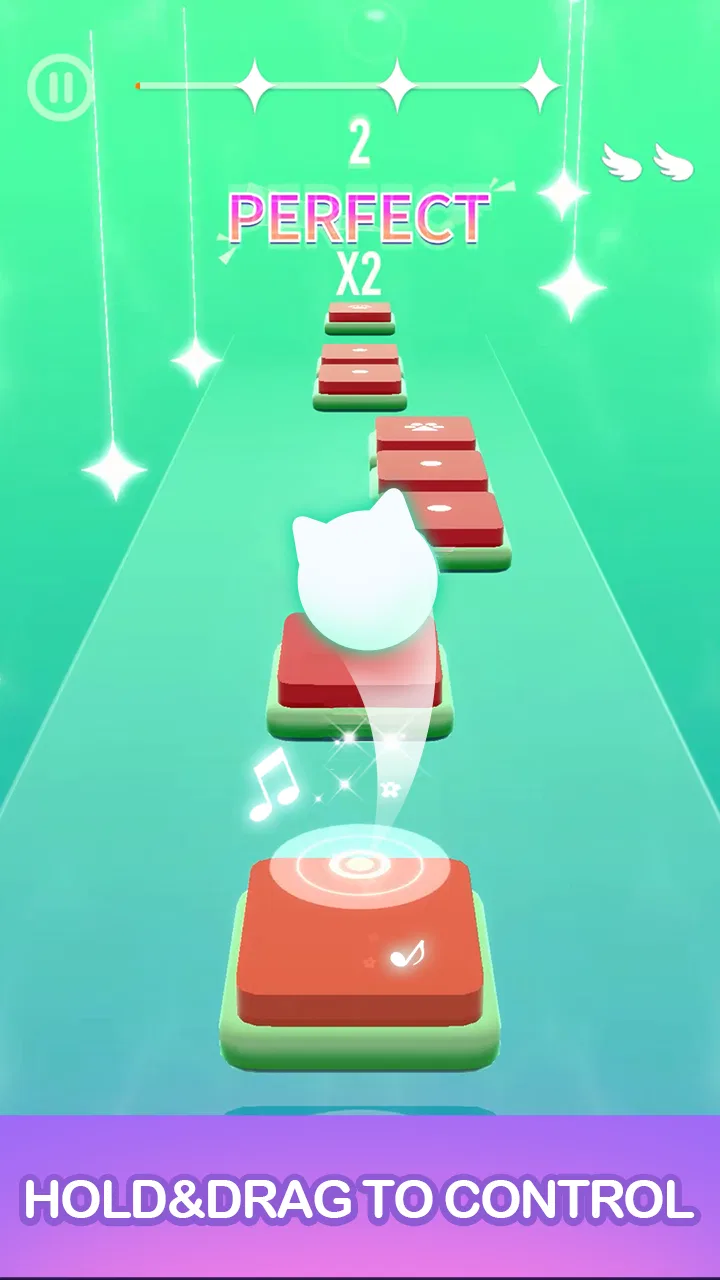
I picked up Dancing Cats - Cute Music Game expecting a light rhythm distraction, and that is exactly where it works best. It is a music game from Cobby Labs built around tapping piano-style tiles while animated cats dance and meow along with the beat. The idea is easy to understand within seconds, but the timing becomes noticeably less forgiving once the music speeds up. I found it cheerful rather than demanding, which makes it a comfortable choice for short sessions when I want something playful without learning a complicated control scheme.
The game is free to start and is rated for Everyone, so it is easy to recommend as a casual family-friendly option. It has also attracted a 4.7 average from around 152 thousand ratings and passed 50 million installs, which gives it a much larger audience than many small rhythm games. Those figures do not change the basic experience, but they do suggest that the simple cat-and-tile formula has broad appeal. I would describe it as a quick reflex game with a musical theme, not as a full music-learning tool or a deep rhythm simulator.
What the first few minutes are really like
The opening experience is deliberately straightforward. You see a sequence of tiles and tap them in time, trying to keep the run moving without breaking the rhythm. The cats provide the personality: they turn an ordinary tile-tapping exercise into something visually soft and amusing. Their presence matters because the underlying action is repetitive. Without that character layer, the game would feel much closer to a basic piano-tile clone.
You May Also Like

 AccuWeather: Weather Radar
AccuWeather Review: A Quick, Clear Forecast for Everyday Decisions
For everyday plans, the best forecast is the one you can understand quickly. AccuWeather makes rain timing, radar, and local conditions easy to act on, with a few trade-offs.

 Hill Climb Racing
Why Hill Climb Racing Still Turns Crashes Into One More Run
A tiny car, a bumpy hill and one more upgrade: Hill Climb Racing keeps resurfacing because its simple chaos makes every near-miss feel personal.

 AliExpress - Shopping App
AliExpress Makes Global Shopping Feel Personal, but Shoppers Bear the Risk
AliExpress turns a global marketplace into a pocket-sized discovery engine. Its reach is useful, its shopping loop compelling, and its trade-offs easy to miss.

 Lords Mobile: Kingdom Wars
Lords Mobile Is a Kingdom-Building Routine, Not a Quick Match
A case-by-case verdict on the building, battles, device demands, and social commitments that make Lords Mobile rewarding for some players and exhausting for others.

 PDF Scanner app - TapScanner
TapScanner Makes Paperwork Easier to Capture, Check, and Share
TapScanner makes scanning with a phone feel less like a rescue operation and more like a dependable step in getting work done. Its capture tools are useful, though not flawless.

 Block Blast!
 Shows How Much a Puzzle Game Can Leave Out
A quiet grid game shows why puzzle players increasingly value instant clarity, repeatable skill and low-pressure play—and where the genre still needs to catch up.
More From Our News Desk
View All News


I recommend starting with your phone held comfortably and your attention on the lower half of the screen, where the next taps usually matter most. New players often look at the cat animation because it is the most noticeable part of the screen, but the useful information is in the tile pattern and its movement. Once I treated the cats as encouragement rather than a timing guide, my taps became more consistent.
The best expectation to set is that success comes from rhythm and concentration, not from exploring a large world. This is a compact game loop: begin a musical sequence, tap accurately, and try to maintain control for longer. It suits a bus ride, a short break, or a few minutes before bed. It is less suitable if you want a story, character development, multiplayer competition, or a music library that functions like a traditional player.
The sound design is central to the appeal. The meows and musical cues give the taps a playful identity, while the visual reactions make mistakes feel less severe than they might in a serious rhythm title. I still found that headphones can help when the surroundings are noisy, but I would not treat this as a game that requires specialist audio equipment. Its charm comes from combining a familiar timing challenge with a deliberately cute presentation.
Installing it without overthinking the choice
The game is available at no upfront cost, with optional in-app purchases priced at $2.99 per item. That makes it easy to try before deciding whether it deserves a regular place on your phone. I would approach the purchase options carefully during the first session. The important question is not whether the game looks attractive, but whether you enjoy repeating the timing loop after the novelty of the cats has settled.
On Android, the listed minimum operating-system requirement is version 6.0. That is a relatively accessible starting point for people using older compatible phones, although smooth play can still depend on the device itself and whatever else is running in the background. Before playing seriously, I close demanding apps and make sure my finger is not covering the lower edge of the screen. Those small adjustments are more useful than changing settings repeatedly.
There is no reason to rush through the first launch. I suggest playing one short attempt simply to learn how the tiles respond. Use the first run to notice whether taps register where you expect them to and whether the audio feels synchronized with the animation. If the game feels difficult immediately, do not assume you are failing at rhythm; the screen position, device response, and surrounding noise can all affect the first impression.
For a child, I would play the opening session together rather than handing over the phone with no explanation. The controls are simple, but the temptation to tap rapidly can make the game feel harder than it is. Showing that the goal is accurate timing, not frantic movement, gives a young player a better starting habit. Since the content rating is Everyone, the presentation is approachable, but ordinary supervision around purchases is still sensible.
How I reached the first meaningful success
My first useful improvement came from making smaller finger movements. Beginners often lift the finger too far after every tap, especially when the tiles arrive quickly. I kept my hand relaxed and focused on placing each tap cleanly instead of chasing the animation. That reduced accidental misses and made the music feel more continuous.
A second helpful technique is to listen for the beat before trying to play at full speed. I let the opening moments establish the pattern, then matched my taps to the sound rather than reacting only to the tile positions. This is particularly useful when the visual movement becomes busy. The cats are entertaining, but the audio gives a steadier sense of timing once the screen starts demanding more attention.
When I completed a sequence successfully, the achievement felt meaningful because it came from adjusting my method rather than simply repeating the same hurried attempt. That is the right way to approach this game: treat each miss as information. Did I tap early? Did I watch the character instead of the lane? Did my thumb drift because I was holding the phone awkwardly? Answering those questions is more productive than blaming the speed alone.
The most useful beginner habit is to aim for clean timing before chasing longer runs. A short, controlled attempt teaches more than a frantic session that ends with a string of accidental taps. Once the basic rhythm feels natural, I can focus on endurance and faster patterns without changing the way I hold the phone.
Small adjustments that make the game easier to read
I found that screen glare can make the tiles harder to distinguish, especially outdoors. A shaded position or a slight change in viewing angle helps more than expected. If you are playing on a small phone, use one thumb consistently and avoid switching hands halfway through a sequence. On a larger phone, two-handed support can make the device steadier, but the tapping finger should still follow a predictable path.
Another practical tip is to avoid playing immediately after using an app with a very different interaction style. Moving from rapid scrolling to precise taps can leave your finger moving too aggressively. I get better results when I pause for a moment, place the phone securely, and begin with the intention of following the beat. That short reset is especially useful during a quick break when concentration is limited.
The game can also work as a gentle focus exercise, though I would not present it as a formal training program. A few attempts encourage me to listen carefully and coordinate sight with touch. The benefit disappears if I play while watching television or carrying on a conversation, because the game depends on attention. It is casual, but it is not completely mindless.
Confusing moments and how I interpret them
The biggest source of confusion for a first-time player is the difference between visual excitement and playable information. The cats move, the music continues, and the tiles can arrive quickly, so it is easy to watch everything at once. I now give priority to the next tile and use the surrounding animation only as decoration. That single change makes the screen feel much calmer.
Another misunderstanding is expecting every miss to mean the controls are inaccurate. Sometimes the problem is simply that I tapped according to the melody I imagined rather than the actual beat. Familiar musical phrasing can lead me to anticipate the next note. Waiting for the tile and listening to the track together is more reliable than relying on memory or instinct.
Players may also wonder whether the game is suitable for long sessions. In my experience, it is better in short bursts. Repeated tile patterns can become tiring, and concentration drops before the game itself stops being enjoyable. I would play several brief rounds rather than treating it like a long evening game. That approach preserves the novelty of the cats and reduces the frustration caused by late-session mistakes.
The free model is another point worth considering. Since optional items cost $2.99 each, I would not buy anything during the first few minutes just because it is offered. First decide whether the core tapping feels satisfying. If you enjoy the basic loop and want to support or extend your experience, a purchase may feel reasonable; if the rhythm action already seems repetitive, spending will not solve that underlying issue.
Where it fits among music and rhythm games
Compared with a traditional piano-learning app, this game is much more playful and much less instructional. It does not replace lessons, sheet music, or deliberate practice on an instrument. Its strength is immediate feedback and a low barrier to entry. Someone who wants to relax with musical timing will probably appreciate it more than someone searching for notes, scales, or structured skill development.
Compared with more serious rhythm games, it is friendlier and easier to begin. There is less need to learn complicated gestures or understand a large collection of systems before enjoying a round. The trade-off is depth. Players who want detailed customization, competitive ranking, elaborate progression, or a broad performance challenge may outgrow the cat-and-tile format.
It also differs from ordinary puzzle games because the music is not just background decoration. The timing of the taps is the central test, so playing with the sound muted can remove part of the experience. On the other hand, it is less demanding than a precision rhythm title that expects expert-level reactions. I see it occupying the middle ground: more interactive than listening to music, but more relaxed than a dedicated competitive rhythm game.
That makes the audience fairly clear. I would recommend it to children who enjoy animated animals, adults wanting a cheerful reflex game, and casual players who prefer learning controls in seconds. I would skip it if I dislike repeated tapping, need a silent game for every situation, or want a substantial single-player adventure. People with limited patience for trial and error may also prefer a slower puzzle game.
Using it in an everyday routine
One realistic use is a five-minute waiting period at a bus stop or in a reception area. I can play a few attempts without committing to a long match, then put the phone away when my turn arrives. The short-session design works well here because there is no need to remember a complicated story or rebuild context after a break.
At home, I would use it as a transition between tasks rather than as a background activity. After finishing a chore, one focused round gives me a small reset. I would not play while cooking, walking, or doing anything that requires both hands, because accurate tapping and safe attention do not mix. The game is simple enough for a spare moment, but it still deserves a stable position and a clear view of the screen.
For families, taking turns can be more enjoyable than leaving one person to play alone. A child can concentrate on matching the beat while an adult points out that calm taps work better than speed. This turns the game into a small shared activity rather than a competition over who can last longest. I would keep purchase decisions separate from the fun, especially when a child is using the device.
What I would do after the first good run
Once I had a reliable feel for the basic timing, I stopped trying to improve everything at once. I focused first on consistency, then on handling faster sequences, and only afterward on making the sessions longer. This order matters because speed without control creates habits that are difficult to correct. The game rewards patience more than dramatic gestures.
I also changed where I played. A quiet room helped me hear the rhythm clearly, while a bright outdoor setting made visual tracking more important. If your first attempts feel uneven, test the same sequence in a calmer environment before deciding that the game is not for you. That experiment can separate a genuine difficulty with the gameplay from a problem caused by distractions.
The current version is 0.3.9, and the game is still best judged by its central loop rather than by expectations of a large console-style feature set. I enjoyed it most when I accepted its narrow purpose: tap along, watch the cats react, and try to improve a little. Looking for a full progression system or a replacement for a music-learning app would make the experience seem limited, while treating it as a charming rhythm toy makes its strengths easier to appreciate.
My final recommendation is positive, with a clear condition. Try it if you want a free, accessible music game that gets to the action quickly and uses cute cats to soften a familiar tile-tapping challenge. Give yourself a few calm attempts before judging the difficulty, and keep optional purchases at $2.99 per item in mind rather than treating them as necessary. I would recommend Dancing Cats - Cute Music Game to anyone seeking short, upbeat sessions, but I would point serious rhythm fans toward a deeper alternative and music students toward a dedicated learning app. For the right player, its modest scope is not a weakness; it is exactly what makes it easy to pick up and enjoy.
FAQs for Dancing Cats - Cute Music Game
01What is the main objective of Dancing Cats - Cute Music Game?
Dancing Cats - Cute Music Game is designed to provide a fun and interactive rhythm-based experience. The main objective is to guide your adorable cat through various music tracks by tapping and swiping to the beat. Players must hit the correct notes to score points and unlock new levels and songs.
02Is Dancing Cats suitable for all age groups?
Yes, Dancing Cats is crafted to be family-friendly and suitable for all age groups. It features adorable cat characters and catchy music tracks that appeal to both children and adults. The game's controls are intuitive and easy to learn, making it accessible to younger players while still challenging for older users.
03What are the in-app purchase options available in Dancing Cats?
Dancing Cats offers various in-app purchases to enhance the gaming experience. Players can buy new cat characters, additional music tracks, and power-ups. While the game is free to play, these optional purchases can help progress faster or unlock exclusive content. Always ensure parental controls are in place for younger players.
04Does Dancing Cats require an internet connection to play?
No, Dancing Cats can be enjoyed offline once downloaded. However, some features, such as downloading new tracks or accessing leaderboards, may require an internet connection. Playing offline doesn't hinder the core gameplay, allowing users to enjoy the rhythm action anywhere, anytime.
05Are there any advertisements in Dancing Cats?
Yes, Dancing Cats does include advertisements, primarily to support the free-to-play model. Ads may appear between levels or when accessing certain features. Players can opt for an ad-free experience by making a one-time purchase. This not only removes ads but often provides additional bonuses or exclusive content.
Pros
- Engaging rhythm-based gameplay.
- Adorable cat animations enhance fun.
- Frequent updates with new songs.
- User-friendly interface for all ages.
- Offline mode available for on-the-go play.
Cons
- Contains ads that can disrupt play.
- Limited free content; in-app purchases needed.
- Repetitive gameplay might bore some users.
- Requires precise timing
- may frustrate new players.
- High battery usage during extended play.

Dancing Cats - Cute Music Game
Gallery